 Bitcoin
  Ethereum
  Tether
  BNB
BNB  XRP
XRP  USDC
USDC  Solana
  TRON
TRON  Lido Staked Ether
  Figure Heloc
  Dogecoin
  USDS
USDS  WhiteBIT Coin
  LEO Token
  Cardano
  Wrapped stETH
  Bitcoin Cash
  Hyperliquid
  Wrapped Bitcoin
  Chainlink
  Binance Bridged USDT (BNB Smart Chain)
  Monero
  Wrapped Beacon ETH
  Ethena USDe
  Canton
  Stellar
  Wrapped eETH
  MemeCore
  Dai
Dai  sUSDS
sUSDS  USD1
USD1  Litecoin
  Zcash
Zcash  Coinbase Wrapped BTC
  PayPal USD
  Avalanche
  Hedera
  WETH
WETH  Shiba Inu
  Rain
Rain  Sui
Sui  USDT0
USDT0  Toncoin
  World Liberty Financial
  Cronos
  Bittensor
  Circle USYC
  Tether Gold
  PAX Gold
  Ethena Staked USDe
  BlackRock USD Institutional Digital Liquidity Fund
  Mantle
  Polkadot
  Uniswap
  Global Dollar
  Falcon USD
  OKB
OKB  Pi Network
  Sky
Sky  Aster
Aster  Little Pepe
  NEAR Protocol
  syrupUSDC
  HTX DAO
  USDD
USDD  Aave
Aave  Pepe
Pepe  Ripple USD
  Bitget Token
  BFUSD
BFUSD  Ethereum Classic
  Ondo US Dollar Yield
  Internet Computer
  Janus Henderson Anemoy Treasury Fund
  Ondo
Ondo  Gate
Gate  Quant
Quant  KuCoin
  Jupiter Perpetuals Liquidity Provider Token
  Algorand
  Superstate Short Duration U.S. Government Securities Fund (USTB)
  Pump.fun
  Render
  POL (ex-MATIC)
  Jito Staked SOL
  Spiko EU T-Bills Money Market Fund
  USDtb
USDtb  Kelp DAO Restaked ETH
  Cosmos Hub
  NEXO
NEXO  Binance-Peg WETH
  Kaspa
Kaspa  Rocket Pool ETH
  Worldcoin
  Morpho
  Binance Bridged USDC (BNB Smart Chain)
  Midnight
  Ethena
  Wrapped BNB
  OUSG
OUSG  Function FBTC
  Aptos
Aptos  Official Trump
  Provenance Blockchain
  Flare
Flare  VeChain
  syrupUSDT
  Filecoin
  YLDS
YLDS  Beldex
  Binance Staked SOL
  XDC Network
  Stable
  GHO
GHO  Jupiter
  Usual USD
  JUST
JUST  NEW X CEO IS BACK
  Polygon Bridged USDC (Polygon PoS)
  Arbitrum
  Solv Protocol BTC
  Artificial Superintelligence Alliance
  Lombard Staked BTC
  TrueUSD
  Bonk
Bonk  A7A5
A7A5  clBTC
clBTC  PancakeSwap
  LayerZero
  Siren
Siren  EURC
EURC  DeXe
DeXe  Virtuals Protocol
  StakeWise Staked ETH
  Janus Henderson Anemoy AAA CLO Fund
  First Digital USD
  Kinetiq Staked HYPE
  tBTC
tBTC  Chiliz
  Stacks
  WrappedM by M0
  Pudgy Penguins
  Dash
Dash  Tezos
Tezos  PRIME
PRIME  Kinesis Gold
  c8ntinuum
  USX
USX  Sei
Sei  Mantle Staked Ether
  ADI
ADI  Ether.fi
  Polygon PoS Bridged DAI (Polygon POS)
  Decred
  Resolv wstUSR
  Sun Token
  COCA
COCA  AINFT
AINFT  edgeX
edgeX  Doge Strategy
  Liquid Staked ETH
  Venice Token
  Arbitrum Bridged WBTC (Arbitrum One)
  Bitcoin SV
  Curve DAO
  Gnosis
  BitTorrent
  Wrapped Flare
  USDai
USDai  Aerodrome Finance
  L2 Standard Bridged WETH (Base)
  Monad
Monad  Steakhouse USDC Morpho Vault
  DoubleZero
  Injective
  Kaia
Kaia  Legacy Frax Dollar
  Plasma
  Binance-Peg XRP
  Zebec Network
  Ether.Fi Liquid ETH
  Official FO
  Renzo Restaked ETH
  Kite
Kite  crvUSD
  Noon
Noon  sBTC
sBTC  Conflux
  Kinesis Silver
  Lido DAO
  Jupiter Staked SOL
  IOTA
IOTA  Savings USDD
  FLOKI
FLOKI  JasmyCoin
  Celestia
  Marinade Staked SOL
  The Graph
  Arbitrum Bridged WETH (Arbitrum One)
  Olympus


After the previous difficulty epoch delivered a 7.76% reduction, Bitcoin’s difficulty moved higher by 3.87% at block height 943488. This latest adjustment represents the third increase recorded so far this year.
Key Takeaways:
- Bitcoin difficulty rose 3.87% at block 943488 as hashrate fell 60.45 EH/s; a 15.73% cut is projected.
- Miners face $30.67 PH/s hashprice and 0.56% fees, pushing firms toward AI over $BTC mining.
- Bitcoin network nears April 19, 2026, adjustment as slower 11:51 blocks signal easing difficulty ahead.
Bitcoin Mining Tightens
The Bitcoin network has logged a total of seven adjustments this year, comprising three increases and four decreases. The most recent reduction, two weeks ago, was sizable, arriving after consecutive gains of 14.73% and 0.45% across the prior two epochs.
Following the latest adjustment, the difficulty rating is now 3.87% higher, making blocks that much harder to discover, and it further stands at 138.97 trillion times more difficult than Bitcoin’s launch.
As of 4 p.m. Eastern time, 181 of the 2,016 blocks in the current epoch have been mined, placing the network roughly 9% of the way toward the next adjustment expected on April 19, 2026. While it remains early and conditions can shift considerably between now and then, current estimates point to a projected 14.27% reduction.
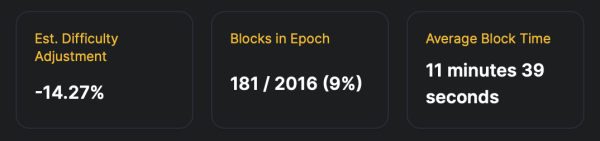
Image source: hashrateindex.com on April 4, 2026.
This outlook stems from a noticeable slowdown in block intervals over the past day, with data from hashrateindex.com indicating an average block time of 11 minutes 39 seconds, well above the expected 10-minute cadence.
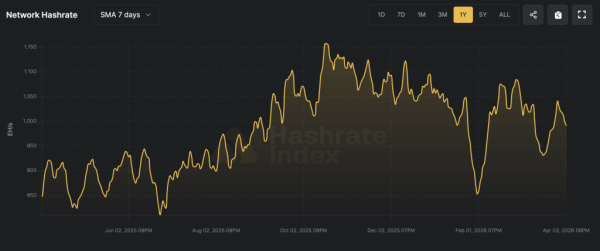
Bitcoin’s total hashrate on Saturday, April 4, 2026, via hashrateindex.com.
What’s behind the shift? A decline in hashrate. Bitcoin.com News reported on March 28 that the Bitcoin network’s total computational power had exceeded 1,000 exahash per second (EH/s), or 1 zettahash per second (ZH/s). On that day, hashpower reached 1,022 EH/s, whereas it now sits 60.45 EH/s lower at 961.55 EH/s.
Revenue Compression Tightens the Squeeze
Compressed revenues are likely a key factor behind the downturn, alongside mining operations opting to allocate resources toward artificial intelligence (AI) infrastructure rather than mining $BTC in pursuit of stronger returns. An infrastructure provider deploying its megawatts toward AI rather than mining bitcoin can realize significantly higher returns, a dynamic that has persuaded many of today’s operators to redirect their focus.
A daily hashprice of $30.67 per petahash per second (PH/s) ranks among the lowest revenue levels bitcoin miners have faced since the network’s early years, when bitcoin carried a far smaller valuation. With 106,335 blocks remaining until the next halving, conditions are poised to tighten further.
Adding pressure, miners cannot rely on fees, which account for just 0.56% of the block reward. In effect, the system appears to be approaching a breaking point. Yet Bitcoin’s difficulty adjustment is engineered for precisely this scenario. If miners exit and hashrate declines, difficulty adjusts downward, drawing participants back with more accessible conditions.
