Blockchain analytics company Chainalysis has rolled out a new automation feature aimed at broadening access to onchain investigative and compliance tools beyond technical users.
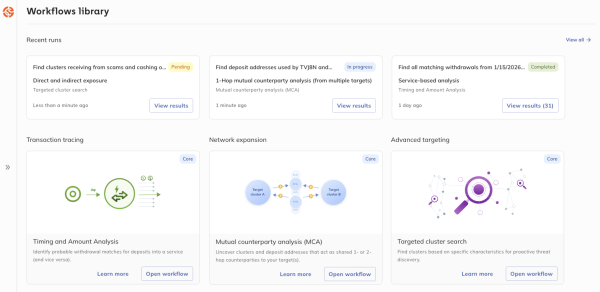
The feature, called Workflows, allows investigators and compliance teams to run predefined blockchain analyses without writing code, reducing reliance on custom SQL or Python queries.
Chainalysis told Cointelegraph that the tool is intended to standardize common investigative processes with prebuilt templates, making them easier to repeat and apply across multiple cases, as the company adapts its data products for a wider range of users.
“What previously required technical expertise and lots of time, can now be done by any user in minutes,” said Ekim Buyuk, senior product manager at Chainalysis. “Instead of asking users to understand data schemas, it asks investigation-level questions such as which actors, wallets, or time frames matter.”
Buyuk said fraud and scam networks are often quick to adopt new technologies to scale their operations, pointing to Chainalysis research indicating that AI-enabled scams extract 4.5 times more money from victims. He added that the pattern illustrates the kinds of activity investigators and compliance teams are increasingly being asked to monitor.
One challenge in investigating scams is that the amount stolen from one victim may not seem like much on a relative scale, but blockchain analysis can uncover fraud networks with hundreds or thousands of victims at scales in the billions of dollars.
Related: Iran’s crypto ecosystem spikes to $7.8B amid mass protests: Chainalysis
Crypto scams and fraud at the end of 2025
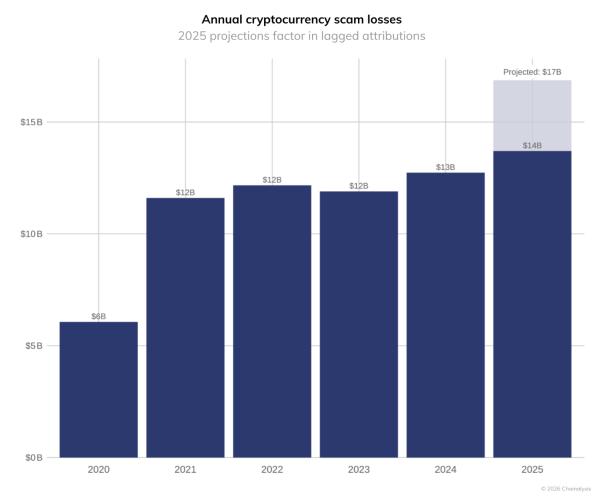
A recent report from Chainalysis estimates that crypto scams and fraud drained about $17 billion in 2025, driven by a surge in impersonation schemes and the increasing industrialization of fraud operations that rely on AI, deepfakes and professional money-laundering networks.
Several incidents late in the year underscored those risks. On Jan. 2, an attacker drained hundreds of wallets across Ethereum Virtual Machine–compatible networks, stealing sub-$2,000 amounts per address in what onchain investigator ZachXBT described as a broad but low-value exploit that could be related to the Ledger hack.
Social-engineering attacks also persisted, with ZachXBT recently identifying a suspected scammer who impersonated Coinbase customer support and stole about $2 million over 2025.
Crypto Scams and Fraud in 2025 report. Source: Chainalysis
Even so, blockchain security company PeckShield said overall crypto hacking losses declined sharply in December, with total losses from hacks and exploits falling to about $76 million, down 60% from November’s $194.2 million.
Magazine: Here’s why crypto is moving to Dubai and Abu Dhabi
 Bitcoin
  Ethereum
  Tether
  XRP
XRP  BNB
BNB  USDC
USDC  Solana
  TRON
TRON  Lido Staked Ether
  Figure Heloc
  Dogecoin
  WhiteBIT Coin
  USDS
USDS  LEO Token
  Hyperliquid
  Wrapped stETH
  Cardano
  Bitcoin Cash
  Wrapped Bitcoin
  MemeCore
  Binance Bridged USDT (BNB Smart Chain)
  Monero
  Wrapped Beacon ETH
  Chainlink
  Stellar
  Canton
  Wrapped eETH
  Zcash
Zcash  Ethena USDe
  sUSDS
sUSDS  Dai
Dai  USD1
USD1  Litecoin
  Coinbase Wrapped BTC
  Avalanche
  Hedera
  PayPal USD
  WETH
WETH  Sui
Sui  Rain
Rain  Shiba Inu
  USDT0
USDT0  Toncoin
  Cronos
  Circle USYC
  Tether Gold
  World Liberty Financial
  BlackRock USD Institutional Digital Liquidity Fund
  Bittensor
  Ethena Staked USDe
  Global Dollar
  PAX Gold
  Polkadot
  Mantle
  Uniswap
  Sky
Sky  Falcon USD
  NEAR Protocol
  OKB
OKB  Pi Network
  Little Pepe
  Aster
Aster  HTX DAO
  syrupUSDC
  Pepe
Pepe  Janus Henderson Anemoy Treasury Fund
  Ripple USD
  Aave
Aave  Internet Computer
  USDD
USDD  Ondo US Dollar Yield
  Bitget Token
  BFUSD
BFUSD  Ethereum Classic
  Ondo
Ondo  KuCoin
  Gate
Gate  Pump.fun
  Jupiter Perpetuals Liquidity Provider Token
  Morpho
  Quant
Quant  United Stables
  Spiko EU T-Bills Money Market Fund
  POL (ex-MATIC)
  Jito Staked SOL
  Ethena
  Kaspa
Kaspa  Kelp DAO Restaked ETH
  Render
  Algorand
  Binance-Peg WETH
  Cosmos Hub
  Rocket Pool ETH
  NEXO
NEXO  Superstate Short Duration U.S. Government Securities Fund (USTB)
  Binance Bridged USDC (BNB Smart Chain)
  USDtb
USDtb  Worldcoin
  Wrapped BNB
  Arbitrum
  Function FBTC
  Blockchain Capital
  Aptos
Aptos  Filecoin
  Flare
Flare  JUST
JUST  syrupUSDT
  Official Trump
  Beldex
  Provenance Blockchain
  Binance Staked SOL
  Midnight
  VeChain
  Jupiter
  OUSG
OUSG  XDC Network
  YLDS
YLDS  NEW X CEO IS BACK
  Polygon Bridged USDC (Polygon PoS)
  Stable
  Solv Protocol BTC
  GHO
GHO  Lombard Staked BTC
  DeXe
DeXe  Usual USD
  Bonk
Bonk  clBTC
clBTC  PancakeSwap
  Siren
Siren  TrueUSD
  A7A5
A7A5  Chiliz
  edgeX
edgeX  StakeWise Staked ETH
  Pudgy Penguins
  Artificial Superintelligence Alliance
  Kinetiq Staked HYPE
  币安人生 (BinanceLife)
  tBTC
tBTC  Dash
Dash  WrappedM by M0
  ADI
ADI  Virtuals Protocol
  Venice Token
  EURC
EURC  First Digital USD
  Stacks
  c8ntinuum
  LayerZero
  Mantle Staked Ether
  Janus Henderson Anemoy AAA CLO Fund
  Tezos
Tezos  Polygon PoS Bridged DAI (Polygon POS)
  Monad
Monad  Resolv wstUSR
  Sei
Sei  COCA
COCA  USX
USX  Ether.fi
  Kinesis Gold
  Doge Strategy
  Liquid Staked ETH
  Sun Token
  Arbitrum Bridged WBTC (Arbitrum One)
  PRIME
PRIME  RaveDAO
  Aerodrome Finance
  Curve DAO
  Wrapped Flare
  Decred
  Celestia
  L2 Standard Bridged WETH (Base)
  AINFT
AINFT  Steakhouse USDC Morpho Vault
  Lido DAO
  Injective
  BitTorrent
  SPX6900
  Binance-Peg XRP
  Bitcoin SV
  Ether.Fi Liquid ETH
  Gnosis
  Renzo Restaked ETH
  Conflux
  FLOKI
FLOKI  Noon
Noon  sBTC
sBTC  DoubleZero
  Kinesis Silver
  crvUSD
  Jupiter Staked SOL
  Kaia
Kaia  Savings USDD
  USDai
USDai  JasmyCoin
  Legacy Frax Dollar
  Marinade Staked SOL
  Ape and Pepe
  Arbitrum Bridged WETH (Arbitrum One)
  Maple Finance