 Bitcoin
  Ethereum
  Tether
  BNB
BNB  XRP
XRP  USDC
USDC  Solana
  TRON
TRON  Lido Staked Ether
  Figure Heloc
  Dogecoin
  USDS
USDS  WhiteBIT Coin
  LEO Token
  Cardano
  Wrapped stETH
  Hyperliquid
  Bitcoin Cash
  Wrapped Bitcoin
  Chainlink
  Binance Bridged USDT (BNB Smart Chain)
  Monero
  Wrapped Beacon ETH
  Ethena USDe
  Canton
  Stellar
  Wrapped eETH
  MemeCore
  Dai
Dai  sUSDS
sUSDS  Zcash
Zcash  USD1
USD1  Litecoin
  Coinbase Wrapped BTC
  PayPal USD
  Hedera
  Avalanche
  WETH
WETH  Shiba Inu
  Sui
Sui  Rain
Rain  USDT0
USDT0  Toncoin
  Bittensor
  World Liberty Financial
  Cronos
  Circle USYC
  Tether Gold
  PAX Gold
  Ethena Staked USDe
  BlackRock USD Institutional Digital Liquidity Fund
  Mantle
  Polkadot
  Uniswap
  Global Dollar
  Sky
Sky  Falcon USD
  OKB
OKB  Pi Network
  Aster
Aster  Little Pepe
  NEAR Protocol
  syrupUSDC
  HTX DAO
  USDD
USDD  Pepe
Pepe  Ripple USD
  Ondo US Dollar Yield
  BFUSD
BFUSD  Aave
Aave  Bitget Token
  Ethereum Classic
  Internet Computer
  Janus Henderson Anemoy Treasury Fund
  Ondo
Ondo  Gate
Gate  KuCoin
  Quant
Quant  Jupiter Perpetuals Liquidity Provider Token
  Superstate Short Duration U.S. Government Securities Fund (USTB)
  Pump.fun
  Algorand
  Render
  POL (ex-MATIC)
  Jito Staked SOL
  Spiko EU T-Bills Money Market Fund
  Morpho
  Kelp DAO Restaked ETH
  USDtb
USDtb  Kaspa
Kaspa  Binance-Peg WETH
  Cosmos Hub
  Rocket Pool ETH
  NEXO
NEXO  Worldcoin
  Binance Bridged USDC (BNB Smart Chain)
  Ethena
  Midnight
  Wrapped BNB
  OUSG
OUSG  Function FBTC
  Filecoin
  Aptos
Aptos  Official Trump
  Flare
Flare  Provenance Blockchain
  syrupUSDT
  XDC Network
  YLDS
YLDS  Beldex
  Binance Staked SOL
  VeChain
  GHO
GHO  Arbitrum
  JUST
JUST  Jupiter
  Stable
  NEW X CEO IS BACK
  Polygon Bridged USDC (Polygon PoS)
  Usual USD
  Solv Protocol BTC
  Artificial Superintelligence Alliance
  Lombard Staked BTC
  TrueUSD
  Bonk
Bonk  A7A5
A7A5  clBTC
clBTC  PancakeSwap
  LayerZero
  Siren
Siren  DeXe
DeXe  EURC
EURC  Virtuals Protocol
  StakeWise Staked ETH
  Janus Henderson Anemoy AAA CLO Fund
  Stacks
  Kinetiq Staked HYPE
  tBTC
tBTC  First Digital USD
  Pudgy Penguins
  WrappedM by M0
  Dash
Dash  Chiliz
  Tezos
Tezos  PRIME
PRIME  ADI
ADI  c8ntinuum
  USX
USX  Kinesis Gold
  Mantle Staked Ether
  Sei
Sei  Ether.fi
  Polygon PoS Bridged DAI (Polygon POS)
  Decred
  Resolv wstUSR
  Bitcoin SV
  COCA
COCA  edgeX
edgeX  Sun Token
  Doge Strategy
  Liquid Staked ETH
  AINFT
AINFT  Arbitrum Bridged WBTC (Arbitrum One)
  Gnosis
  BitTorrent
  Curve DAO
  Venice Token
  Wrapped Flare
  DoubleZero
  Aerodrome Finance
  L2 Standard Bridged WETH (Base)
  Monad
Monad  Steakhouse USDC Morpho Vault
  Injective
  Plasma
  Legacy Frax Dollar
  Kaia
Kaia  Kinesis Silver
  Binance-Peg XRP
  Official FO
  Ether.Fi Liquid ETH
  crvUSD
  Renzo Restaked ETH
  Kite
Kite  Lighter
  Noon
Noon  sBTC
sBTC  Lido DAO
  SPX6900
  FLOKI
FLOKI  Jupiter Staked SOL
  Celestia
  Savings USDD
  Conflux
  The Graph
  JasmyCoin
  Marinade Staked SOL
  Maple Finance
  Arbitrum Bridged WETH (Arbitrum One)
  Ape and Pepe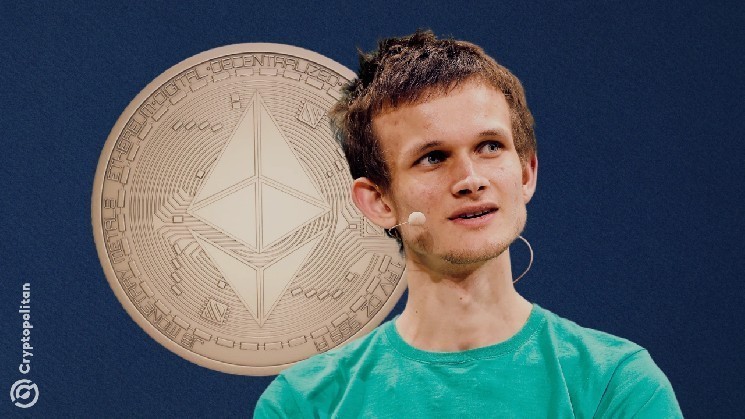


Ethereum’s recent protocol upgrades suggest more than incremental improvements as high-performance competitors chip away at its dominance.
Vitalik Buterin detailed the plan to build what he called a “cypherpunk principled non-ugly Ethereum” — not as a replacement chain, but as a tightly integrated evolution of the existing system.
The proposal follows $ETH developers formally scheduling Fork-Choice Enforced Inclusion Lists (FOCIL) for the forthcoming Hegota hard fork (currently targeted for late 2026). And with account abstraction updates and long-term architectural changes, that transition signals a broader recalibration of Ethereum’s roadmap at a time when rivals are catching up.
The development comes as BNP Paribas Asset Management taps Ethereum for a new blockchain pilot, this time issuing a tokenised share class of a French‑domiciled money market fund.
The tokenized shares, issued onchain using BNP Paribas’ AssetFoundryTM platform, will give gated access via a “permissioned access model on $ETH … whereby holdings and transfers are restricted to eligible and authorised participants, in line with applicable regulatory requirements,” according to the announcement.
Ethereum targets rival chains with Base-Layer overhaul and ZK integration
FOCIL, known as EIP-7805, aims to improve Ethereum’s censorship resistance at the protocol level by forcing validators to include all transactions. The mechanism would allow validator committees to apply fork-choice rules and inclusion lists to force the inclusion of transactions. If the proposed block fails to include legitimate public mempool transactions, the chain can fork, allowing inclusion within a limited number of slots at once.
The native account abstraction mechanism is introduced in EIP-8141 and is also in the pipeline for Hegota. Ethereum’s scaling strategy has relied for years on a rollup-first roadmap, driving execution into Layer 2 networks but leaving the base layer relatively lean.
But Buterin’s recent rhetoric points to a different emphasis. Instead of relying solely on rollups to improve scalability and ease user experience, Ethereum is turning its attention to improving the architecture of its base layer.
Buterin has also advised longer-term structural changes. This includes embedding zero-knowledge (ZK) proofs into Layer 1 validation in a proposed “Beam Chain”.
The timing is notable. High-performance Layer 1 chains like Solana have become popular for their high throughput, low fees, and simplified user experience, despite their monolithic architecture.
With Ethereum’s growing modularity, these networks handle transaction processing on a single layer, reducing fragmentation. While the blockchain network’s multiple rollup model has improved scalability, it has also made issues more complex — specifically around liquidity, bridging, and user experience. As rival ecosystems seek simplicity and speed, Ethereum seems set to recalibrate. Buterin recently likened those upcoming changes to what he described as a “jet engine changes in-flight” of sorts, referencing the network’s 2022 move to proof-of-stake.
He even considered multiple potentially larger transformations of Ethereum (state tree rewrites, leaner consensus, ZK-native validation, virtual machine changes).
Base-layer upgrades reinforce security and neutrality
Instead of fragmentation through Layer 2s and competing EVM-based chains, Ethereum’s leadership seems set upon recapturing architectural control back at the base layer. The “hard turn” has less to do with delivering throughput and more with upholding the features that the network itself was built around: censorship resistance, neutrality, and cryptographic robustness.
The extent to which this recalibration is a defensive move, a stand against its high-performance rivals, or a natural evolution of Ethereum’s roadmap remains open to debate. But what is unambiguous is that Ethereum is no longer willing to rely solely on rollups for its future growth.
To that end, as high-speed rivals recalibrate expectations for blockchain performance, Ethereum is betting that hardening its core — while streamlining its long-term architecture — will help position it as the industry’s bedrock settlement layer. The bet may pay off in the next phase, starting with Hegota.
Want your project in front of crypto’s top minds? Feature it in our next industry report, where data meets impact.
